01
State
The problem the badge solves, in one sentence that is not about technology.
A friendly dog whose spots are a QR code, stuck on the safety gear you already walk past - and the two things anyone can do with one.
 ResQ-R
A badge on the gear, a page behind the badge, and two roles: the people who make badges and the people who claim them.
 ResQ-R
ResQ-R
ResQ-R
Safety equipment is silent until the worst possible moment - and that moment is not when anybody wants to be reading six-point type.
ResQ-R
 ResQ-R
 ResQ-R
ResQ-R
ResQ-R
How much safety equipment did you walk past today?
ResQ-R
Say it out loud: ResQ-R, rescuer. It is a safety-education project of EdQuest, and it is two things at once. It is a badge - a cartoon Dalmatian in a fire helmet whose spots are a working QR code - and it is the website that makes the badges and hosts the pages behind them. The badge goes on safety equipment that people already walk past every day and never think about: the extinguisher by the kitchen door, the defibrillator cabinet in the lobby, the hydrant on the corner, the storm shelter sign. Scan the spots and you get a short page about that specific thing. What it is. What to do with it. When not to use it and run instead. This lesson is what the badge is made of and what the two halves of the system actually do.
Three objectives. First, you will be able to say what problem the badge solves, which is not a technology problem - it is that safety equipment is silent, and the moment somebody needs it is the worst possible moment to be reading a manual. Second, you will be able to name the parts of a badge: the artwork, the code, the short code printed underneath, and the claim PIN. Third, you will be able to describe the two roles - creating a badge and registering a device - and say which one you would be in your own situation, because most people are only ever one of them.
Here is the thesis of the whole project. A fire extinguisher cannot explain itself. It carries a small printed label, in six-point type, mostly legal text, written for somebody who is calm and wearing their reading glasses. The moment a person actually needs the extinguisher is the moment they are least able to read any of that. And it is worse than a reading problem, because the useful instruction is often not how to use the thing at all - it is when not to. Get out. Close the door. Call for help. That sentence does not fit on the label and it is the one that saves people. So the badge is not a novelty and it is not marketing. It is the piece of equipment being given a way to speak, in ordinary language, to whoever is standing in front of it, at the moment they are standing there.
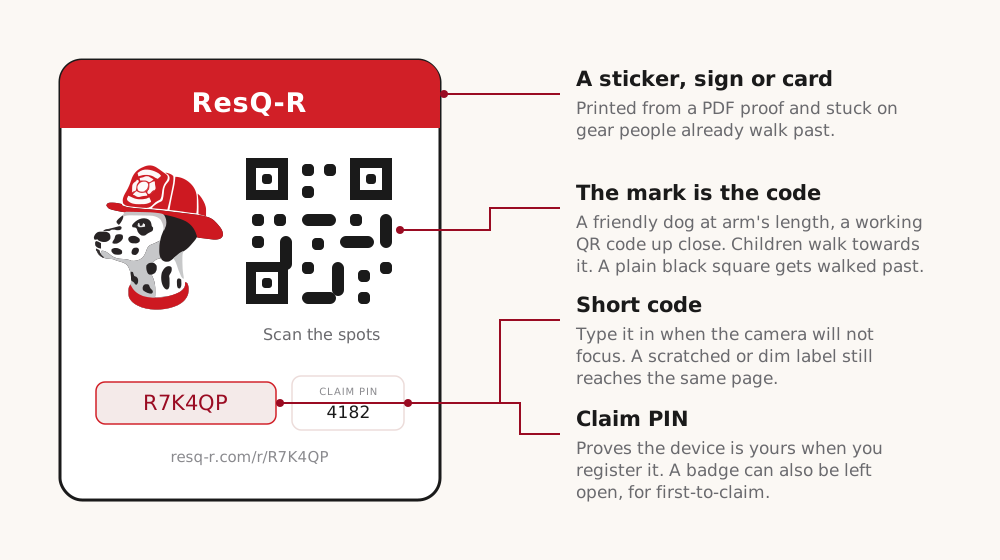
The badge itself. The artwork is a Dalmatian in a fire helmet, and the choice is doing real work: from across a room it reads as a friendly dog, so children walk towards it, and adults who would ignore a plain black square look twice. Up close, the spots are the code, and a phone reads them exactly as it would read any other QR code. Printed underneath is the short code - six characters like R7K4QP - which is not decoration either. It is the fallback for a scratched label, a phone that will not focus, a basement with no signal, or somebody who simply prefers typing. Type it into resq-r.com and you land on the same page. And on a blank badge there is a fourth element, the claim PIN: a short number that proves the badge is physically in your hand when you go to register the thing you stuck it on. A badge can also be left open, with no PIN, in which case the first person to register it gets it.
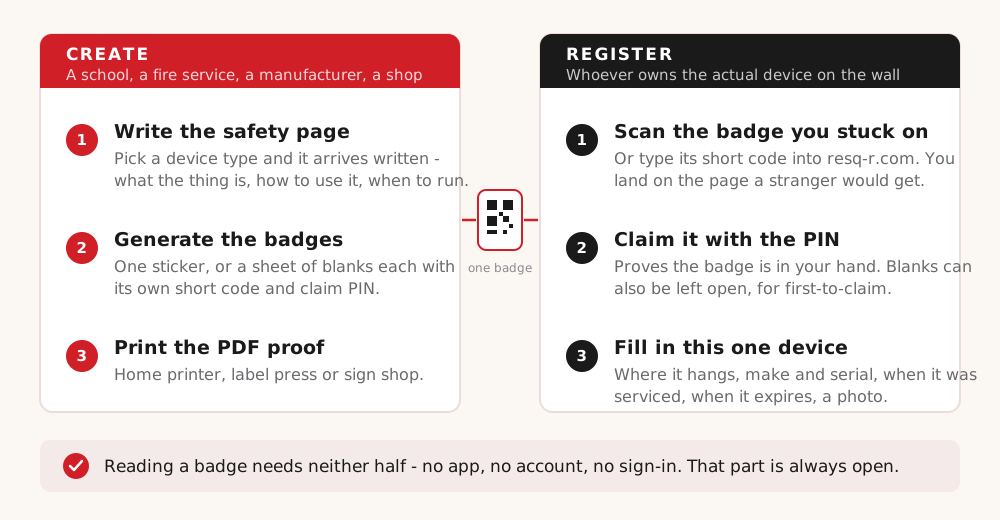
Two halves, and almost nobody does both. Creating is what a fire department, a school, a manufacturer or a shop does: pick a device type and the safety wording arrives already written, generate a badge or a whole sheet of blanks, and export a print-ready PDF proof for a sticker, a sign or a card. Registering is what the owner of one actual device does: scan the badge you just stuck on the wall, claim it with its PIN, and record the details of this one specific object - where it hangs, its make and serial, when it was serviced, when it expires, a photograph of the expiry label. A large facility does both: it mints a hundred blanks, sticks them on everything, and registers them over the following weeks as somebody walks the site. And the thing to hold on to is that reading needs neither half. The page is open to everyone, always, with no account anywhere in the picture.
One more idea and then we are done with mechanics. Every badge points at a device type - fire extinguisher, defibrillator, smoke alarm, storm shelter. The type carries the canonical description and instructions for that kind of object, so somebody tagging a badge fire extinguisher gets the pull, aim, squeeze, sweep steps without writing a word. A badge can override any single field where the stock wording is wrong: a different extinguisher style where those steps would mislead keeps the type, so it still groups and reports correctly, and replaces only the sentence that is wrong. And the content resolves live rather than being copied when the badge is made. A safety error corrected on the type is corrected on every badge that inherits it, including the ones already printed and already on walls. Lesson 04 is largely about what that makes possible.
Two minutes, and answer from memory before you look anything up. Walk yourself from your front door to wherever you are sitting now and count the pieces of safety equipment you passed. Extinguishers, alarms, defibrillators, exits, hydrants, shelter signs, first-aid kits, eyewash stations. Most people find they pass between three and ten and could not tell you the state of a single one. Then ask the harder question: of the ones you passed, which could you actually operate under pressure, without reading anything? And the third one, which is the one this project exists for: who is responsible for the ones you cannot name? Somebody is. Very often they do not know it either.
Three things. The badge exists because equipment is silent and the moment of need is the worst moment to start reading - so the point is not the code, it is the sentence the code makes available. A badge is artwork, a code, a short code and, on blanks, a claim PIN, and each of those is there for a specific failure. And there are two roles - creating badges and registering devices - which most people only ever occupy one of, while reading requires neither. The next four lessons are the same system from four different chairs: your own home, a public street, a workplace, and an inspection.