01
Describe
An inventory built by walking the site, and why it does not drift the way a typed one does.
A hundred blanks, a print sheet and a walk round the site - and an equipment list that is built by using it rather than by typing it.
 ResQ-R
The third perspective: a site with hundreds of items, a spreadsheet that has drifted, and nobody whose job it is to reconcile them.
 ResQ-R
ResQ-R
ResQ-R
 ResQ-R
ResQ-R
ResQ-R
ResQ-R
ResQ-R
ResQ-R
ResQ-R
Third perspective: a workplace. Any site above a certain size has a safety equipment list, and any site above a certain size has a safety equipment list that is wrong. Not through negligence - through drift. An extinguisher gets moved during a refurbishment and the spreadsheet does not move with it. A contractor adds an eyewash station in a new bay and nobody tells the person who keeps the list. Somebody leaves and the file goes with them, or survives as version four final revised on a shared drive. The underlying problem is that the list lives somewhere other than the equipment, so keeping them agreeing is a separate job that nobody is actually paid to do. This lesson is what changes when the record lives on the object.
Three things. First, you will be able to describe how an inventory gets built by walking round with a phone rather than by typing, and why that is the difference between a list that stays true and one that drifts. Second, you will be able to explain blanks and claim PINs, which is the mechanism that makes a hundred-item site practical. Third, you will be able to plan the rollout for a real site, including the part everybody underestimates, which is who registers the things after the stickers are on the wall.
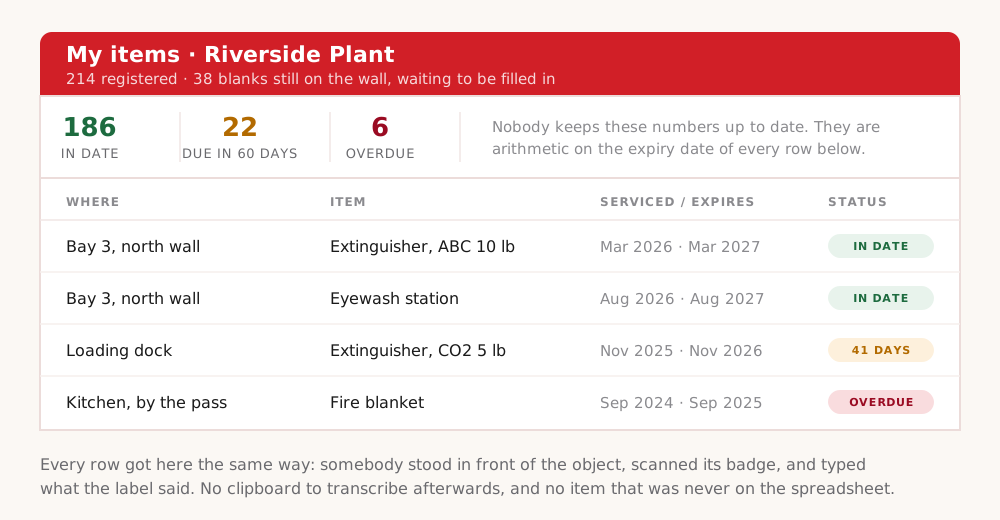
This is a site's item list, and the interesting thing about it is where it came from. Nobody typed it into anything. Every row is there because somebody stood in front of the object, scanned the badge on it, and typed what the label said while looking at the label. The list is a by-product of walking the site rather than a separate artefact to be reconciled with it, which means the two cannot disagree - there is only one of them. And the numbers at the top are not a claim anybody maintains. In date, due within sixty days, overdue: those are arithmetic on the expiry date of every row below, so they are correct the moment a date is corrected and they cannot quietly go stale the way a status column in a spreadsheet does. The six overdue are not a failure of the system. They are the first honest picture most sites have had.
The mechanism that makes this practical at scale is minting blanks. Registering a hundred items one at a time from a desk is a data-entry project and it will not happen. So instead you generate a hundred unfilled badges as a single print-ready sheet, each with its own short code and its own claim PIN printed underneath. Print the sheet, walk the site, and stick badges on everything. Nothing is registered yet and that is fine - the badges are live and each one already resolves to a page. Then the registration happens gradually, by whoever is nearest: the person who walks bay three registers the six items in bay three, on their phone, standing in front of them. The PIN is what makes this safe to hand out, because it proves the person registering had the physical label in their hand and did not simply guess a code.
Rolling out a site, in four steps. First, walk it once with nothing but a notebook and count what is actually there, by category. Not the spreadsheet - the site. You are establishing the real number, which is nearly always larger than the recorded one, and it is the number you order badges against. Second, mint that many blanks plus a sensible margin and print the sheet. Third, stick them, in one pass, on everything, putting the badge where somebody standing in front of the object can see it without moving anything. And fourth - this is the step that decides whether the project works - name who registers each area and when. Not the safety manager for all of them; the person who is in that area anyway, with a date. A site that skips step four ends up with a hundred live badges pointing at empty records, which is worse than not starting, because now the wall looks like it has been done.
Four workplace traps. First, keeping the old spreadsheet running alongside as a safety net. Two lists means two truths and, within about three months, one of them is being maintained and the other is being cited. Pick one. Second, one shared login for the whole site, because it is convenient. It is convenient right up to the audit, when every record on the site is attributed to maintenance at maintenance dot local and the attribution is worth nothing. Third, publishing what should have stayed private. A site's serial numbers, service contractor and full asset list are not public safety information, and the fact that the safety wording is public does not mean the rest should follow it. Fourth, badges outliving their equipment. Gear gets scrapped, replaced and moved, and a badge on a wall pointing at a record for an extinguisher that left the building two years ago is actively misleading. When the object goes, the record goes with it.
Three things from the workplace perspective. An inventory built by scanning is a by-product of doing the round, so it cannot drift away from the site the way a typed list does. Blanks and claim PINs are what make a hundred-item rollout an afternoon with a sticker sheet instead of a data-entry project. And the step that decides whether any of it works is naming who registers what, by when. One more perspective to go, and it is the one that turns all of this from useful into necessary: what happens when somebody official asks you to prove it.