01
State
The two questions almost every safety inspection reduces to.
The two questions an inspector asks, why a record kept on the object answers both, and what a scan is honestly evidence of.
 ResQ-R
The fourth perspective: mandates, inspections, and the difference between having done the work and being able to show it.
 ResQ-R
ResQ-R
ResQ-R
Nearly every inspection is two questions: is the thing there, and was the work done. Everything else is paperwork about those two.
ResQ-R
 ResQ-R
ResQ-R
ResQ-R
ResQ-R
ResQ-R
ResQ-R
ResQ-R
ResQ-R
ResQ-R
The smoke alarm in your own hallway is the whole system in five minutes: stick it on, claim it, find the manufacture date on the back, and let it tell you in nine years. Everything else in this class is that, at a different scale.
The last perspective. Almost every organisation operates under some mandate about safety equipment: that a device of a given kind is present in a given place, that it is inspected on a schedule, that the inspection is recorded. And there is a gap that everybody who has been through an inspection knows about, which is the gap between having done the work and being able to demonstrate that you did. Those are different problems and the second is often the harder. The work happened - a competent person walked round in March and checked everything - and the evidence is a signature in a binder in an office, or an email, or a memory. This lesson is about closing that gap by keeping the record on the object, and about being honest concerning what the record does and does not prove, because a compliance claim that does not survive contact with an auditor is worse than no claim at all.
Three things. First, you will be able to state the two questions almost every inspection reduces to. Second, you will be able to explain why a dated record attached to the object is better evidence than the same information in a binder, and what specifically makes it better. Third - and this is as important as the other two - you will be able to say precisely what ResQ-R does and does not record, which is narrower than people assume, and therefore where the record stops and your jurisdiction's actual requirements begin.
Strip an inspection down and almost all of it is two questions. Is the thing there? And was the work done? Everything else - the paperwork, the schedules, the sign-off sheets - exists to answer one of those two about some particular object, on some particular date. Which tells you what a good record has to look like. It has to be attached to a specific object rather than to a site or a category, because a category cannot be inspected. It has to carry dates, and the dates have to mean something specific: when this was serviced, when it expires. It has to have an owner, because a record nobody is accountable for answers neither question convincingly. And it has to be reachable at the moment somebody is standing in front of the thing, which is the requirement that a filing cabinet in an office has never once satisfied.
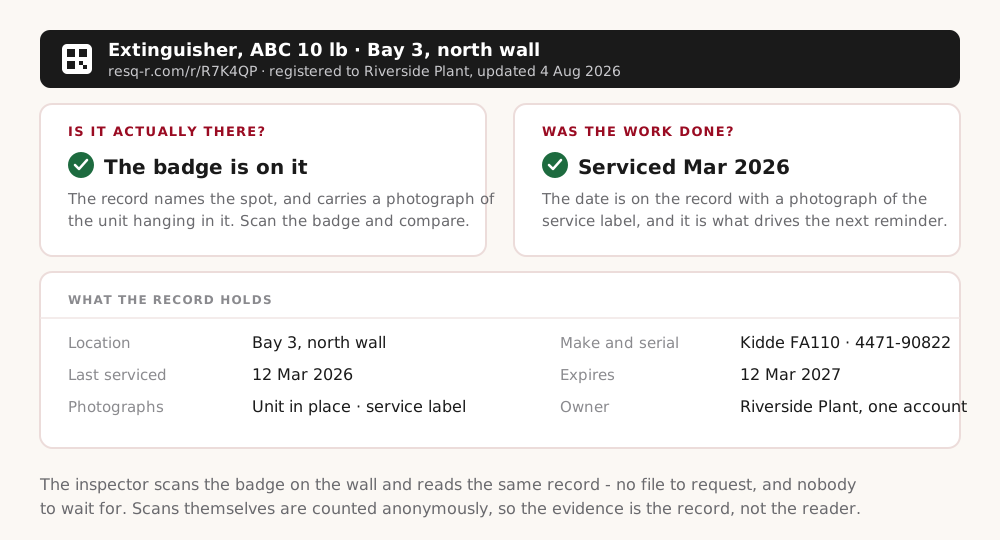
So here is a record that answers both questions, and it is worth being precise about how. Is it there? The badge is on the object, the record names the spot it hangs in, and there is a photograph of it hanging there. An inspector standing in front of the extinguisher scans that badge and compares what the record says with what is in front of them, which is a check nobody can do from a binder. Was the work done? The service date is on the record, with a photograph of the service label, and it is the same date that drives the reminder for the next one. Underneath both sit the identifying details and the timestamps: what this device is, its make and serial, when the record was last touched and by which account. And the property that makes this different from a binder is not the format, it is the location. The record is reachable from the object, without asking anybody for a file and without waiting for the person who has the key to the cabinet.
Making a device audit-ready, in four steps. First, register it properly: the badge on the object, the location precise enough that somebody else could find it - bay three, north wall, not building two - and the identifying details off the plate. Second, photograph it. Two pictures: the unit hanging where the record says it hangs, and the service or expiry label close enough to read. A photograph is the part of this that an inspector can check against the wall in front of them, and it is the step people skip. Third, set the service date and the expiry, because that pair is what turns the record from a description of the past into something that interrupts you before the deadline rather than after it. And fourth, decide who keeps it current, by name, with a date in the calendar. A record that was true when it was created and has not been touched in three years is not evidence of anything except that somebody once cared.
Four traps, and the first one is the important one. ResQ-R counts scans, but it does not record who scanned. That is a deliberate design decision - the scan log holds no personal data, no address, and no identity - and it means a scan is not evidence that anybody inspected anything. Do not present it as one. What is evidence is the record itself: dates entered by a known account, photographs attached to them, and timestamps on when it was last touched. That is genuinely useful and it is not a certificate from a qualified person, which your jurisdiction may well still require. Second, back-filling: updating six months of dates in one sitting because an audit is coming. The record knows when it was last edited, and a history that appeared all at once is worse than an admitted gap. Third, treating the badge as the requirement, when the mandate says a device must be present and maintained, not that it must be badged. And fourth, letting compliance rest on one person's account, so that when they leave, the records are intact and nobody can update them.
Three things. Inspections reduce to two questions - is it there, and was the work done - and a good record answers both about one specific object. A record kept on the object beats the same facts in a binder because it is reachable by whoever is standing in front of the thing, and because it can carry a photograph they can check against the wall. And the limit matters as much as the capability: scans are counted anonymously and prove nothing about who looked, the record is evidence of what was entered and when, and neither is a substitute for whatever your jurisdiction requires. Used that way it is a genuinely better record. Sold as more than that, it is a liability.
Where to go next. The site itself is the fastest way to understand it - open a badge page and read what a stranger reads, before you make anything. The device type library is worth browsing even if you never create a badge, because it shows you what good plain safety copy for a category looks like. Your own jurisdiction's inspection requirements are the document that governs everything in the last lesson, and nothing here overrides them. And if any of this is going anywhere near a school, the rest of the EdQuest catalogue is where the teaching side of the project lives.
That is the class. Four perspectives on one small idea: that a piece of safety equipment should be able to explain itself to whoever is standing in front of it. At home it means you find out before the date passes instead of after. In public it means the thing on the corner finally teaches somebody something, and can be corrected after it is printed. At work it means the list is a by-product of the round rather than a job nobody is paid to do. And on the record it means the evidence lives on the object, written at the time by the person who did the work. Go and badge one thing. The smoke alarm in your own hallway will teach you more in five minutes than another hour of this would.